
Privacy Fence Ideas for Sarnia Backyards: Styles and Materials Compared
The best privacy fence for a Sarnia backyard starts with the view you want to change. A fence beside a patio has a different job from one along a driveway or behind a garden. Before choosing a colour or copying a design, decide where privacy matters, how you use the yard and how much upkeep you want. These comparisons will help you narrow the options.
Start with the areas you actually want to screen
Stand where you sit, cook and walk rather than assessing the yard only from the back door. Look toward neighbouring windows, shared pathways and the street. Note whether the unwanted view is at eye level, above the fence line or visible through a gate opening.
A taller fence is not automatically the answer to an elevated sightline. The viewing angle and distance matter. Ask your designer to consider the seating location and fence position together. Moving a sitting area or adding a separate permitted screen may be more useful than changing the entire perimeter.
Sketch the yard with three priorities: privacy, access and openness. A solid fence may work around a patio while a more open section preserves the view toward a garden. Explore the Sarnia fence styles in DMC’s project gallery to identify examples that suit those specific needs.
Privacy fence styles for Sarnia homes
Vertical wood boards
Vertical boards give a familiar backyard appearance and work with straightforward fence lines. Ask how boards will be spaced and how the layout will look after the wood moves through seasonal changes. A drawing or sample detail is more useful than the word “privacy” on its own.
Overlapping or board-on-board layouts
Overlapping boards can reduce direct views through gaps, depending on their arrangement. These designs use more material than a single layer of spaced boards. Review the view from both sides and at an angle, especially where neighbours share the boundary.
Horizontal wood designs
Horizontal lines can complement a modern patio or simple exterior. Their appearance depends on consistent spacing, straight framing and how the design handles corners and changes in grade. Ask to see the support details rather than choosing entirely from a close-up inspiration image.
Vinyl privacy panels
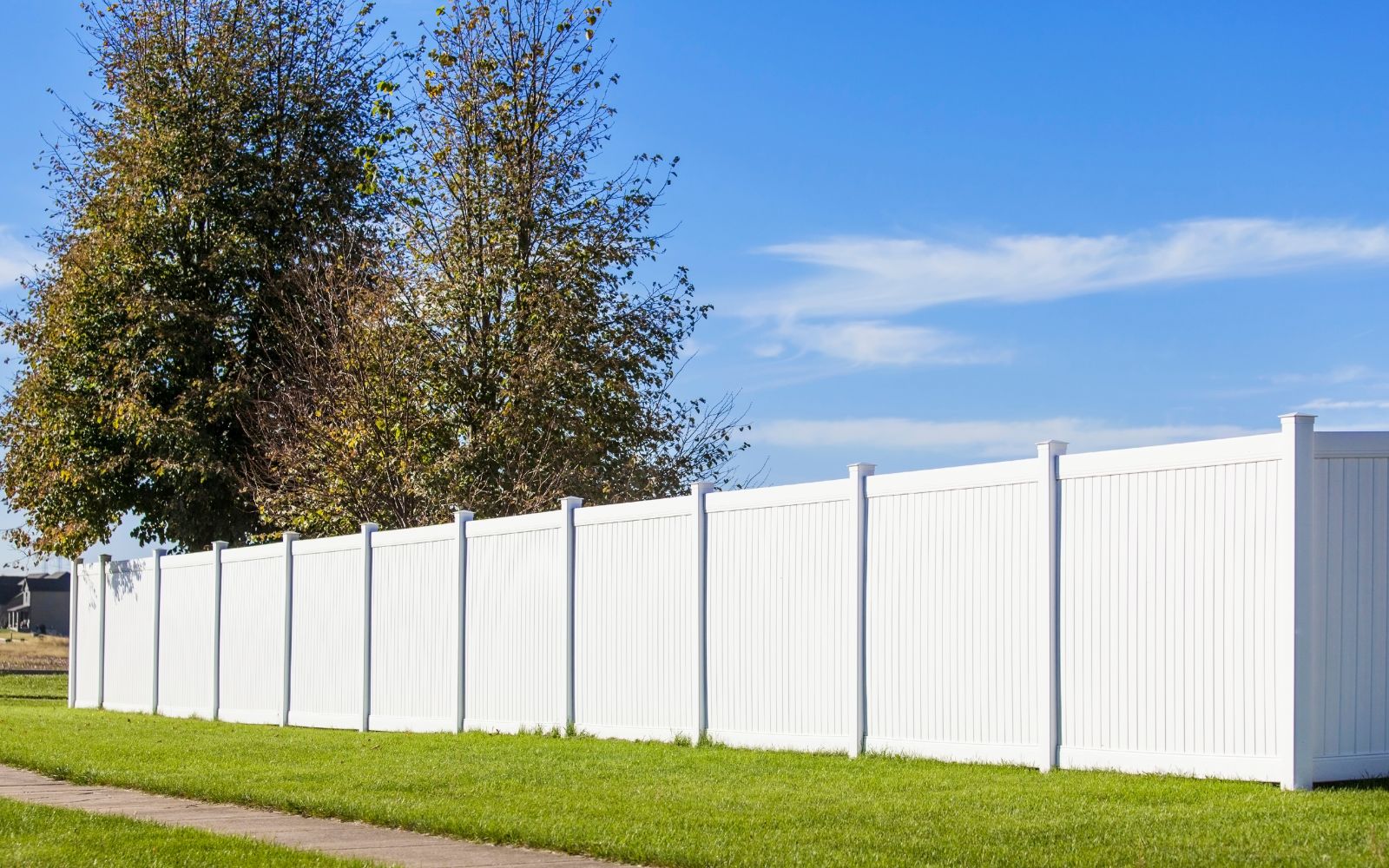
Vinyl offers a different maintenance routine from wood and can provide a consistent panel appearance. Review the actual product’s privacy level, colour choices and cleaning instructions. Confirm how panels terminate at gates and how replacement components can be sourced later.
Compare material and layout tradeoffs
DMC’s service page includes wood, vinyl, metal and chain-link options. The table distinguishes materials that can provide a solid screen from options that usually leave a more open view. Availability and the details of a particular system should be confirmed in your quote.
| Option | Privacy approach | Upkeep to discuss | Useful design question |
|---|---|---|---|
| Vertical wood | Depends on board spacing | Cleaning, fasteners and finish care | How will seasonal gaps affect screening? |
| Overlapping wood | Overlapping faces reduce direct sightlines | Access to clean and maintain both faces | What does each neighbour see? |
| Vinyl panels | Product-specific solid panel designs | Cleaning and component checks | Are matching replacement parts available? |
| Metal pickets or chain link | Generally open rather than solid | Coating, fittings and gate hardware | Is an open boundary actually preferable here? |
A privacy accessory added to an open fence changes the project’s design considerations. Do not assume any screen can simply be attached to an existing structure. Have the proposed fence and screening assessed together.
Plan the gate as part of the design
A gate can become the weak point in an otherwise private fence if the opening, latch or swing is an afterthought. Check what is visible through the closed gate and how it aligns with the nearest panel. Discuss clearances without asking the installer to eliminate the space needed for operation.
Measure the widest item you expect to move through: a mower, garden cart or equipment for a future backyard project. Consider the route all the way from the driveway. A wide opening is less useful if a tight corner immediately behind it blocks access.
Specify the swing direction and where the open gate will rest. On sloped ground, a gate may need a different arrangement to avoid catching. If the fence forms part of a pool enclosure, have the complete gate and enclosure design checked against the applicable requirements.
Work with your yard’s grade and exposure
For a Sarnia property near the lake or in an open setting, tell your contractor which parts of the yard feel exposed to wind. A solid screen changes how wind interacts with the fence. The post arrangement and framing should be chosen for the actual design and site.
Along a slope, panels may step down or follow the grade, depending on the system. Ask for the transition to be shown before construction. This is particularly useful if you need to limit gaps beneath the fence for a small dog.
Also look at where water goes after rain. Keep drainage routes in the design discussion and avoid treating the fence as a retaining wall. If soil levels differ substantially between properties, the fence and any retaining structure need separate consideration.
Balance privacy with neighbour-facing appearance
Sarnia’s residential fence brochure discusses appearance and neighbour cooperation. Confirm current municipal requirements before committing to the design. A useful early conversation covers what each side will look like, how construction access will work and where the boundary is established.
Our existing fence bylaws guide for Sarnia homeowners covers the regulatory questions in more detail. This style guide is a starting point for choosing the look and function; it does not replace a check of the rules for your location.
Ask whether trim, rails and post caps will be visible from one side or both. If the fence meets an existing section, compare heights and colours in daylight. A small sample can make the difference between an intentional transition and an awkward mismatch.
Choose a maintenance routine you will actually follow
Wood and vinyl require different care. For wood, discuss finish options, drying requirements and the product maker’s maintenance instructions. Avoid choosing a coating schedule based only on a neighbour’s fence, because materials, exposure and previous finishes vary.
For vinyl, follow the manufacturer’s cleaning guidance and check hardware and panel connections periodically. “Low maintenance” still involves looking for damage and keeping gates operating properly. Keep the product name and colour information with your project paperwork.
When budgeting, compare the complete installed design rather than only the material label. Use the DMC fence calculator for a starting wood-fence planning figure, then request a quote for your selected style. DMC Custom Creations can discuss the options with you as part of planning your backyard project.
Frequently asked questions
Which fence material gives the most privacy?
Privacy depends on the layout as well as the material. Solid vinyl panels and suitably arranged wood boards can screen views, while open pickets and chain link generally do not. Review the actual design from several angles.
Are horizontal fences better than vertical fences?
Neither layout is automatically better. Compare appearance, support details, material use and how the fence handles slopes. Choose the design that fits the property and your maintenance preferences.
Can I make an existing chain-link fence private?
Screening may be possible, but adding a solid surface changes the design considerations. Have the existing fence and proposed accessory assessed together before installing it.
Will a privacy fence stop people seeing into an elevated deck?
Not necessarily. An elevated sightline may pass above the fence. Review the viewing angle from the deck and consider the seating arrangement and any permitted screening options.
Should both sides of a shared fence look the same?
Discuss the finished appearance with your neighbour and check current local requirements. Ask the contractor to show both faces, including rails and trim, before you agree on a layout.