Table of Contents
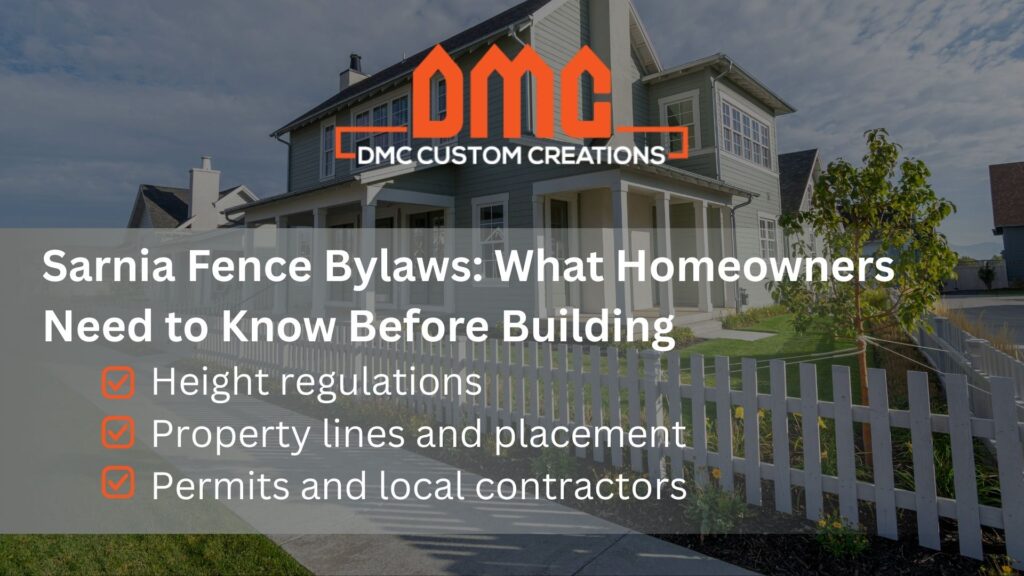
Understanding Sarnia fence bylaws is the first step before starting any fence project. Whether you’re planning a privacy fence, pool enclosure, or decorative boundary, local regulations determine what you can build, how high it can be, and where it can sit on your property.
Many homeowners only discover bylaw issues after construction has started. That often leads to stop-work orders, forced modifications, or even full removal. This guide explains the key fence bylaw requirements in Sarnia and what to consider before moving forward.
Why Fence Bylaws Matter in Sarnia
Fence regulations are not arbitrary. They exist to maintain safety, visibility, drainage control, and neighbourhood standards.
In Sarnia, fence bylaws typically address:
Maximum fence height
Location relative to property lines
Visibility at intersections
Pool safety requirements
Encroachment onto municipal land
Ignoring these requirements can result in fines or complaints from neighbours. The goal is not just compliance. It is building something that lasts without legal complications.
Fence Height Regulations in Sarnia
One of the most common questions homeowners ask involves height limits.
While exact details should always be verified through the City of Sarnia, general fence height regulations often follow this structure:
Rear yard fences: Typically permitted up to 6 feet
Side yard fences: Commonly 6 feet
Front yard fences: Usually restricted to around 4 feet
Corner lots may have additional restrictions due to traffic visibility requirements. This is especially important near intersections or driveways where sightlines must remain clear.
You can review official requirements through the
City of Sarnia Building Department.
Property Lines and Fence Placement
Fence placement is just as important as height.
Before building, homeowners should confirm:
Exact property boundaries
Easements on the property
Utility access routes
Building even a few inches over the line can create disputes. In older Sarnia neighbourhoods where surveys may be outdated, confirming property lines is critical before excavation begins.
Professional fence installation planning should always start with a site assessment.
Pool Fence Requirements in Sarnia
If your fence is part of a pool enclosure, additional regulations apply.
Pool fence requirements Sarnia homeowners must follow generally include:
Minimum height standards
Self-closing and self-latching gates
No climbable structures nearby
Specific spacing requirements between pickets
Pool safety bylaws are stricter than standard fence regulations because they are tied to liability and public safety.
Failure to meet these standards can delay pool approvals and inspections.
Do You Need a Permit to Build a Fence in Sarnia?
Most residential fences do not require a building permit if they fall within standard height limits and are not part of a pool enclosure.
However, permits may be required if:
The fence exceeds height limits
It is part of a pool installation
It affects grading or drainage
It is located on a commercial property
It is always best to confirm before starting construction.
What Impacts Fence Installation Costs in Sarnia
Fence costs vary based on design, materials, and site conditions. Below is a breakdown of common cost factors.
| Factor | Impact on Cost | Why It Matters |
|---|---|---|
| Fence Height | Medium | Taller fences require more material and labour |
| Material Choice | Medium–High | Wood, vinyl, and composite vary in durability |
| Soil Conditions | Medium | Proper post depth prevents shifting in freeze-thaw cycles |
| Property Layout | Low–Medium | Slopes and corners increase installation complexity |
Proper installation is as important as bylaw compliance. Poor post depth or compaction can cause leaning within a few seasons, especially in Ontario’s climate.
Common Fence Mistakes Homeowners Make
Based on real-world projects, the most common issues include:
Building without confirming height restrictions
Installing fences on municipal easements
Failing to account for grading and drainage
Choosing materials not suited to Ontario weather
Many of these mistakes are preventable with early planning and local expertise.
Local Insight: Drainage and Frost Matter in Sarnia
Sarnia’s freeze–thaw cycles affect fence longevity. Posts must be installed below frost depth and set correctly to prevent heaving.
Additionally, fences should not obstruct natural drainage patterns. Blocking runoff can create pooling along property lines, which leads to neighbour complaints.
Understanding local soil conditions is just as important as understanding bylaws.
Why Working With a Local Fence Contractor Matters
Interpreting Sarnia fence bylaws is one part of the process. Installing a durable fence that complies with those regulations is another.
At DMC Custom Creations, we design and install custom fences that align with local regulations while focusing on long-term performance.
You can learn more about our fence installation services.
If you are unsure whether your project meets Sarnia’s fence bylaw requirements, speaking with an experienced contractor early can prevent complications later.
Frequently Asked Questions About Fence Bylaws in Sarnia, Ontario
Rear and side yard fences are commonly permitted up to 6 feet, while front yard fences are often limited to around 4 feet. Corner lots may have additional visibility restrictions.
Most standard residential fences do not require permits unless they exceed height limits or are part of a pool enclosure.
In many cases, yes, but confirming exact property boundaries is essential before construction begins.
Yes. Pool fence requirements include minimum height, self-closing gates, and specific spacing standards for safety compliance.
Violations can result in fines, required modifications, or full removal of the fence.